

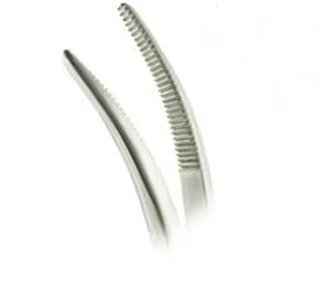
Euro-Med® Hemostatic Forceps Kelly 5-1/2 Inch Curved Serrated Tips NonSterile, (EA/1)
Customize
Product Details
Euro-Med® Hemostatic Forceps Kelly 5-1/2 Inch Curved Serrated Tips NonSterile
The Euro-Med® hemostatic forceps are a reusable Kelly-pattern instrument designed with a locking finger ring handle, curved tip style, and serrated tips. This OR / surgical grade instrument is made of German stainless steel, measures 5-1/2 inches in length, and is supplied nonsterile.
This item is best positioned as a professional-use surgical instrument for procedure and surgical environments that require a reusable locking hemostatic forceps in the Kelly style.
Key Features:
• Kelly hemostatic forceps
• 5-1/2 inch length
• OR / Surgical Grade
• German stainless steel construction
• NonSterile
• Locking finger ring handle
• Curved tip style
• Serrated tips
• Scissor type
• MPN: 61909
Benefits:
• Supports professional surgical and procedure-room instrument needs
• Reusable stainless steel construction is suited for repeated professional use
• Locking design supports controlled instrument handling
• Curved serrated tip configuration supports standard Kelly forceps use
Specifications:
• Brand: Euro-Med®
• Manufacturer: Cooper Surgical
• Product Type: Hemostatic Forceps
• Size/Dimensions: 5-1/2 Inch Length
• Material: German Stainless Steel
• Color: Silver
• Sterility: NonSterile
• Country of Origin: Unknown
• UNSPSC: 42291802
• Grade: OR / Surgical Grade
• Handle Type: Finger Ring Handle
• Locking Type: Locking
• Style: Kelly
• Tip Style: Curved
• Tip Type: Serrated Tips
• Type: Scissor Type
• Buy American Act (BAA) Compliant: No
• Trade Agreement Act (TAA) Compliant: No
• Minimum Selling/Purchasing Unit: EA
• Minimum Package Qty: 1 EA
• Packaging: EA/1
• MPN: 61909
Application:
Designed for professional-use surgical and procedure settings requiring a reusable Kelly hemostatic forceps with curved serrated tips.
• Procedure rooms
• Surgical centers
• Specialty practices
• Clinical instrument sets
Warnings:
• Nonsterile product
• For professional use by trained personnel
• Inspect the instrument before use and remove from service if damaged
• Follow facility cleaning, handling, and reprocessing procedures.